 English
 Français
 Deutsch
Tunisian food is a quiet showstopper. Three thousand years of culinary cross-pollination — Berber base, Phoenician seafood traditions, Roman wheat agriculture, Arab spices, Andalusian refinement, Ottoman pastry, and a French colonial echo — left behind the spiciest, most layered cuisine in the Maghreb. It's a Mediterranean kitchen with the heat turned up, and the dishes change personality every two hundred kilometres. Here are the twelve plates worth planning a trip around, and the cities where each one is at its best.
1. Harissa — The Soul of Tunisian Cooking
If Tunisia had a national flavour, it would be harissa. The deep red paste of sun-dried chilies, garlic, caraway, coriander, and olive oil arrives on every table — as a dip with bread, stirred into stews, smeared onto sandwiches. UNESCO inscribed harissa-making on its Intangible Heritage list in 2022, and the official heartland is the Cap Bon peninsula. Workshops around Nabeul still hand-stem and grind the chilies, and the markets in Hammamet sell jars of properly aged paste that taste nothing like the supermarket tube back home.
2. Brik à l'œuf — The Diplomatic Dish
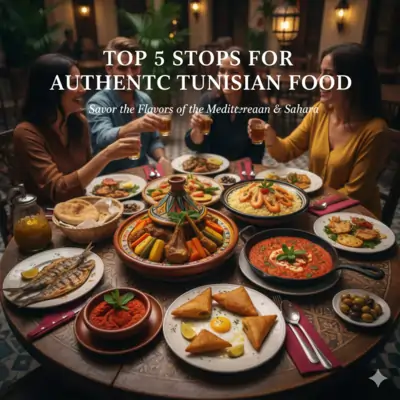
A triangular crisp pastry of malsouka dough wrapped around an egg yolk, tuna, parsley, capers, and a pinch of harissa, then fried until the outside shatters and the yolk inside is still runny. Brik is the most photogenic starter in the Tunisian repertoire — and the most awkward, because the yolk waits to escape down your wrist. The local convention: hold it like a pizza slice, find the corner with the egg, and take the first bite in one go. Sleeves rolled up.
"There are two kinds of people in a Tunisian restaurant: those who eat their brik in one bite, and tourists. The waiter knows immediately."
3. Couscous Tunisien
Couscous is the Friday lunch ritual across the country, but the Tunisian version is drier, spicier, and more tomato-forward than its Moroccan cousin. Inland, it's served with lamb or merguez; on the coast, fish takes over. The semolina is steamed three times over the broth so it carries the flavour of whatever's cooking below.
The regional variations are worth chasing:
- Sousse & the Sahel — fish couscous with grouper or sea bream, lighter sauce, a clean caraway note.
- Sfax — the chef's-pick version: couscous with octopus or cuttlefish, deeply red with concentrated tomato.
- Djerba — couscous bil-hout (with fish), often with a side of pumpkin or sweet potato that quietly balances the heat.
4. Ojja — Tunisia's Shakshuka
If shakshuka and chilli con carne had a North African cousin, it would be ojja. A skillet of slow-stewed tomatoes, peppers, garlic, harissa, and caraway, finished with eggs cracked straight into the bubbling sauce and — most often — sliced merguez sausage. Served from the pan with crusty bread to mop up. It's the workman's breakfast and the small-restaurant lunch standard, and a good ojja is a benchmark for any Tunisian kitchen.
5. Slata Méchouia — The Grilled Vegetable Salad
Almost every Tunisian meal begins with méchouia, a salad of grilled tomatoes, peppers, onions, and garlic, peeled, chopped to a coarse paste, dressed with olive oil and a small amount of harissa, then topped with tuna, hard-boiled egg, and olives. The smokiness comes from grilling the vegetables over open flame until their skins blister. It's deceptively simple and almost impossible to stop eating.
6. Lablabi — Chickpea Soup
The most beloved Tunisian street food, lablabi is a winter warmer of chickpeas in a garlicky cumin broth, ladled over chunks of stale bread torn into the bowl by the diner. On top: a raw egg that poaches in the heat, a spoon of harissa, a drizzle of olive oil, a squeeze of lemon, sometimes capers, tuna, or olives. You build it yourself.
The Tunis Medina has a handful of legendary lablabi counters that open before dawn for the market workers — you eat standing up, with one foot on a stool. The version in La Marsa, a few minutes' drive from Sidi Bou Said, is often cited by locals as the most refined: lighter broth, better chickpeas, the same fierce harissa.
7. Seafood by Region
Tunisia has 1,300 km of coastline, and seafood changes radically as you move down it.
- Sidi Bou Said & La Marsa — grilled fish at sunset. Dorade, loup de mer, and sardines, served with chermoula, lemon, and a small bowl of harissa-spiked olive oil.
- Mahdia & Monastir — octopus and squid, often slow-cooked into a tomato stew or grilled simply. The Mahdia fish market at 5 am is a sight in itself.
- Djerba — poulpe à la djerbienne (octopus Djerba-style), the island's signature dish: octopus simmered with onions, tomatoes, peppers, and saffron until everything melts together.
8. Sweet Treats
Tunisian desserts lean drier and nuttier than their French-patisserie equivalents, with a sticky-syrup tradition shared with the rest of the Ottoman world.
- Makroudh — semolina pastries stuffed with date paste and soaked in honey syrup. The specialty of Kairouan, where bakeries on Avenue 7 Novembre have been making the same recipe for generations.
- Bambalouni — a light, ring-shaped fritter rolled in sugar, fried to order and eaten hot. The most famous stall is on the main square of Sidi Bou Said; you can smell the oil before you see the queue.
- Samsa — crisp triangular pastries of almonds, sesame, and lemon zest, drizzled with rose-water syrup. Tea-time perfection.
9. Drinks
- Mint tea with pine nuts — strong, sweet green tea poured into small glasses with a handful of toasted pine nuts floating on top. The most Tunisian way to end any meal.
- Citronade — fresh lemonade with mint, sometimes orange-blossom water. The default summer cooler.
- Boukha — a clear fig brandy distilled in Tunisia for over a century. Served chilled, neat, after dinner. Bracing.
- Celtia — the national lager. Light, easy, very cold. Pairs perfectly with grilled fish on the coast.
10. A Food Tour by Car
If you're serious about eating your way around Tunisia, the country rewards self-drive more than tour buses. Here's a five-day food itinerary we recommend to food-curious guests:
- Day 1 — Hammamet: visit a harissa workshop in the morning, lunch on grilled fish at the medina port, late-afternoon Turkish coffee on the ramparts.
- Day 2 — Nabeul: Friday market for spices and pottery, lunch of méchouia and ojja at a family-run gargote, harissa tasting at a producer near the central square. Our Hammamet & Nabeul cultural escape covers this loop with a guide.
- Day 3 — Tunis Medina: breakfast lablabi, lunch at Fondouk El Attarine, dinner of brik and couscous at Dar El Jeld.
- Day 4 — Sidi Bou Said: bambalouni at the main square, grilled fish lunch with Mediterranean views, mint tea at Café des Nattes as the sun sets.
- Day 5 — Kairouan: makroudh at the source, lunch of slow-cooked lamb couscous, take a tin of harissa home.
Pick up the car at the airport or your hotel and you can run this whole circuit in 5 days, with everything dictated by your appetite rather than a coach timetable. Browse the Troisa fleet for the right car or join one of our curated food & culture tours.
Pro Tips for Eating Out
- Look for "gargote" — small canteens with three tables and one menu. The food is what locals eat.
- Tunisians eat lunch around 13:00 and dinner from 20:30. Show up at 18:00 and the kitchen may still be setting up.
- Always order the bread basket. Tunisian bread (khobz tabouna) is the unsung hero of every meal.
Final Thoughts
Tunisian cuisine has never sought the spotlight the way Moroccan or Lebanese cooking has. That's part of its charm — it's genuinely a discovery cuisine, and the best dishes are still being cooked by grandmothers in side-street kitchens rather than served as a curated mezze in a hotel restaurant. Bring an appetite, and ideally a designated driver, because Tunisians will keep feeding you long after you thought you were done.
When you're ready to plan the trip, the Troisa fleet covers everything from a compact for the Hammamet-Tunis-Sidi Bou loop to an SUV if you want to add Kairouan and El Jem on the way south.
Fatima Khemir
Fatima is Troisa's head of customer experience. She has personally onboarded over 5,000 international visitors renting their first car in Tunisia.